
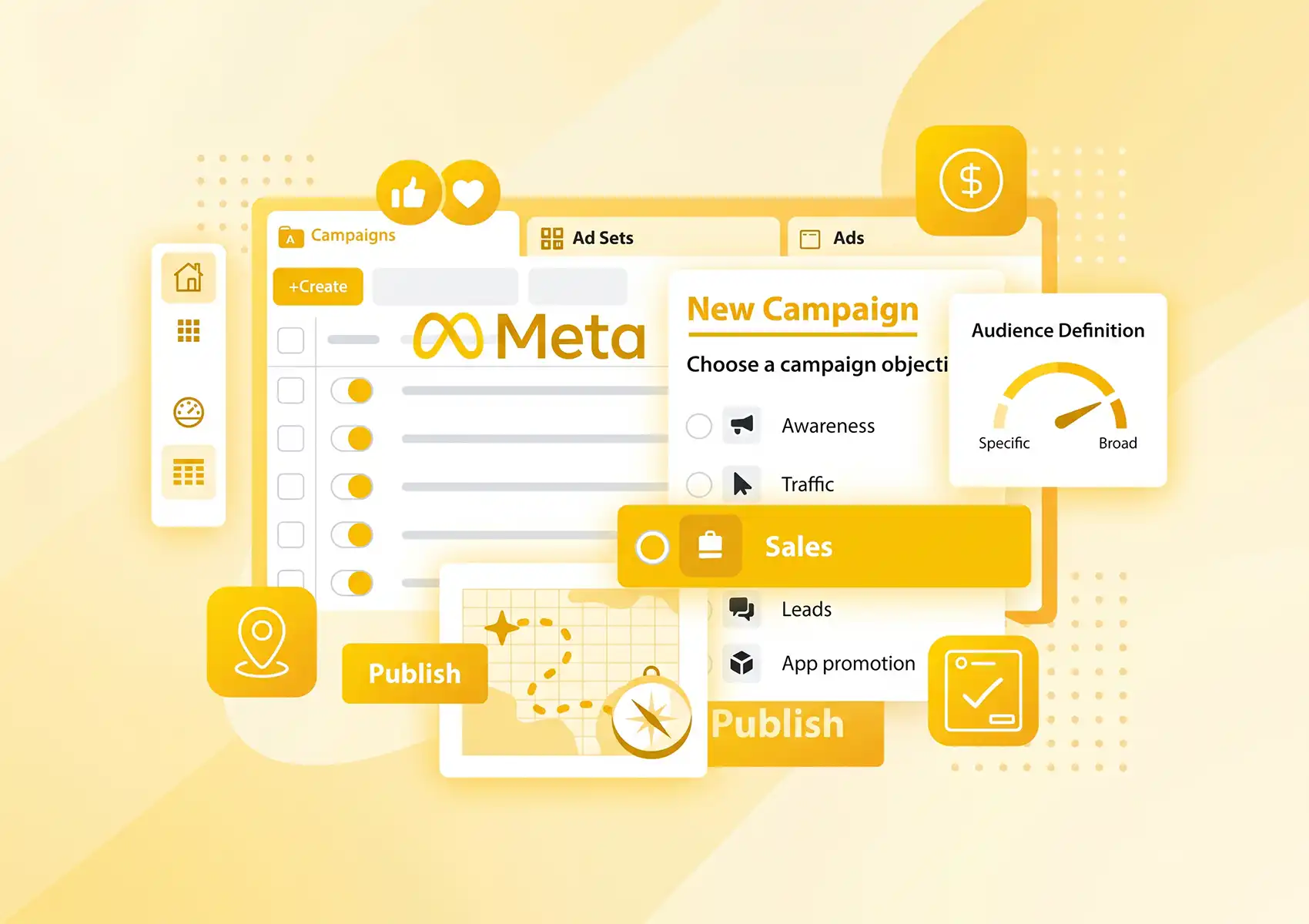
Running Meta Ads for restaurants should be one of the most effective tools available to a dining business. Because Meta platforms, such as Instagram and Facebook, are highly visual, you can trigger instant cravings with high-quality video of your dishes. Furthermore, because these platforms are highly local, you can use precise radius targeting to reach hungry diners who are physically standing just minutes away from your front door. Despite this natural advantage, restaurant social media advertising consistently underdelivers. This is not because the platform fails, but because most campaigns are never built correctly in the first place.
Why Meta Ads Work for Restaurants
Restaurants are a natural fit for Meta’s advertising ecosystem. The platform is visual, local, and built around intent signals that align closely with how dining decisions are actually made.
The Dining Decision Happens Fast and Visually
A hungry diner scrolling through Instagram or Facebook is already in a receptive state. Unlike search advertising, where the user is already committed to a query, Meta Ads intercept the moment before the decision crystallises. A well-timed video of a sizzling dish or a compelling dinner offer can shift a “where should we go tonight” conversation in your direction within seconds.
Meta Targeting Fits the Restaurant Customer Profile
Facebook’s targeting capabilities allow restaurant owners to reach the people most likely to dine at their establishment, rather than broadcasting to a broad, disinterested audience. Location radius targeting, interest-based segmentation, and behavioural signals all combine to put your ad in front of people who are nearby, food-curious, and primed to act.
Where Meta Ads Sit in the Guest Journey
Meta Ads work across multiple stages of the guest journey. At the top, awareness campaigns introduce your restaurant to new audiences. In the middle, retargeting campaigns re-engage visitors who viewed your menu but did not book. At the bottom, conversion campaigns drive direct reservation clicks. A well-structured account works all three stages simultaneously rather than relying on a single boosted post to carry the entire load.
Boosted Posts vs Proper Meta Ad Campaigns
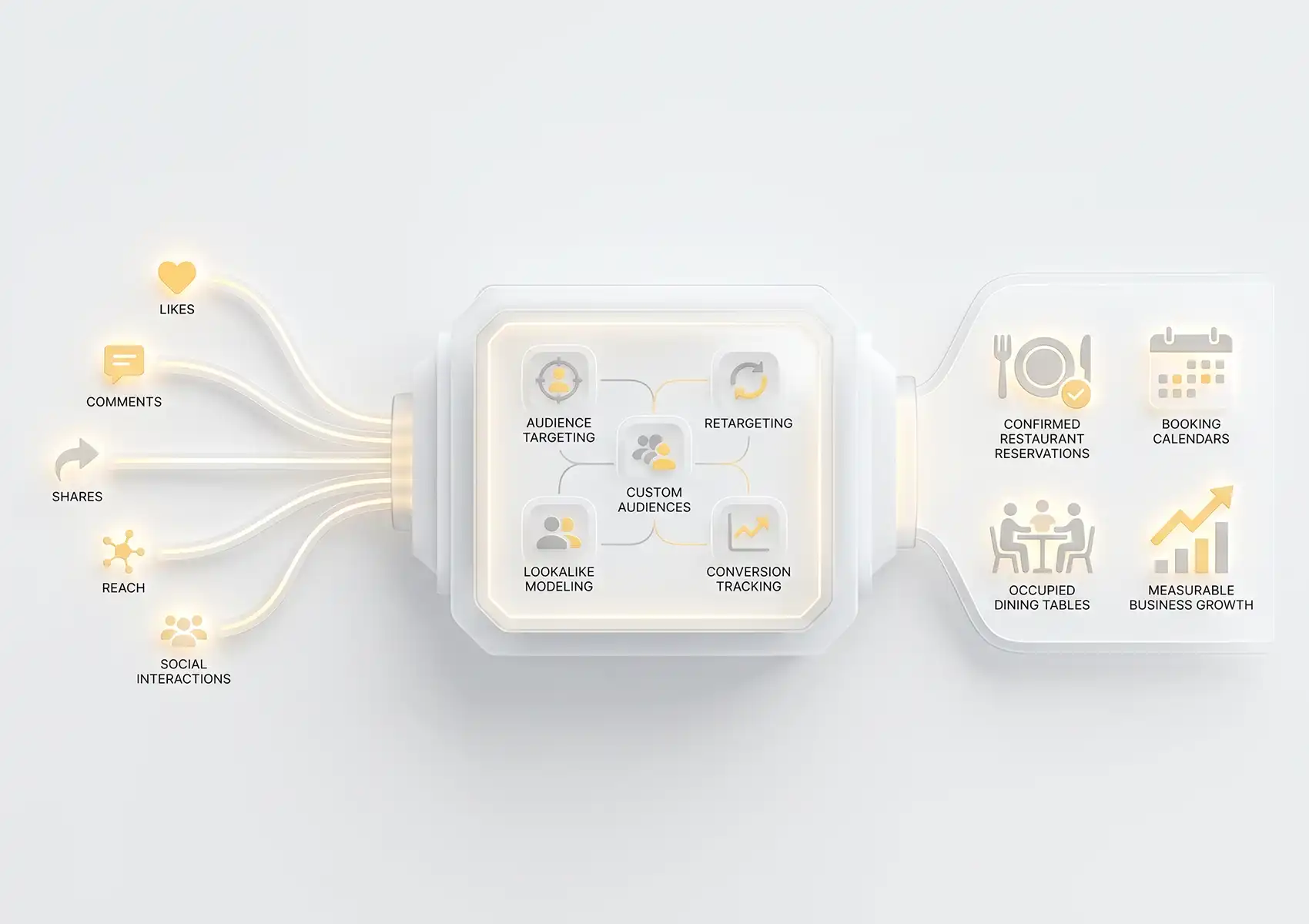
Understanding the difference between boosting a post and running a structured campaign is the foundation of any Meta Ads strategy that delivers measurable results. Getting this distinction right is what separates restaurant ad spend that compounds over time from spend that disappears without a traceable return.
What Boosting a Post Actually Does
Boosting a post reaches a broader audience for a flat fee. It gives you reach and potentially engagement, but it offers limited targeting control, no conversion optimisation, and no access to the full suite of campaign objectives available in Meta Ads Manager. It is a distribution tool, not a performance tool.
What a Proper Campaign Does Differently
A properly structured Meta campaign allows you to define a specific business objective, build custom and lookalike audiences, set conversion events tied to your reservation system, control ad placements, and run creative tests. The algorithm optimises towards your chosen outcome, whether that is website visits, form completions, or direct bookings, rather than simply maximising reach.
When Boosting a Post Is Acceptable
Boosting has a legitimate role in one specific scenario: amplifying organic content that is already performing well as a low-cost awareness tool. If a post is generating strong engagement and you want to extend its reach quickly and simply, a boost is a reasonable short-term decision. For anything tied to a measurable business outcome, use Ads Manager.
Setting Up Meta Ads for Your Restaurant
Getting the technical foundations right before running any campaign prevents wasted spend and ensures you can actually measure what your ads are generating.
Installing the Meta Pixel on Your Website
The Meta Pixel is a piece of code that tracks visitor behaviour on your website and connects that behaviour back to your ad campaigns. Without it, you cannot run retargeting campaigns, optimise for conversion events, or measure whether your ads are driving actual reservation attempts. Installing it correctly is non-negotiable.
Setting Up Meta Ads Manager vs Meta Business Suite
Meta Business Suite is designed for organic social management. Meta Ads Manager is where your campaigns live. Use Ads Manager for all paid activity. The two interfaces look similar but serve different purposes, and conflating them is a frequent source of confusion for restaurant owners setting up their first campaigns.
Defining Your Conversion Events
A conversion event tells Meta what action you want users to take after clicking your ad. For restaurants, this typically involves submitting a reservation form, visiting a booking platform, or completing an online order. Setting these up correctly inside Ads Manager allows the algorithm to optimise delivery towards users most likely to complete that specific action.
Audience Targeting for Restaurant Meta Ads
Targeting is where Meta campaigns either perform or waste money. The restaurants we manage in Bali that see the strongest cost-per-reservation figures are consistently those with the most precisely defined audience strategy.
Core Audiences for Local Diners
Set a geographic radius around your restaurant that reflects your realistic catchment area. Layer this with interest targeting around food, dining, and relevant cuisines to filter for users with a demonstrated appetite for eating out.
Targeting Tourists and Travellers in Bali
Meta allows you to target users whose travel behaviour signals that they are visitors rather than residents. For restaurants in Bali, this is a significant opportunity. Setting a geo-radius around your address and anchoring your creative with local landmarks and visual cues helps connect your ad to the specific location experience visitors are already seeking.
Custom Audiences Built From Your Existing Customers
Uploading your existing customer email list to Meta Ads Manager lets you deliver ads directly to the Facebook accounts of your current diners. This is one of the highest-return targeting options available, because you are advertising to people who have already chosen you once.
Lookalike Audiences to Find New Diners
Once you have a custom audience of at least 100 people, Meta can build a lookalike audience of users with similar characteristics. We use this consistently for restaurant clients looking to expand reach beyond their existing customer base without sacrificing targeting precision.
Retargeting Website Visitors and Instagram Engagers
Users who have visited your menu page or engaged with your Instagram profile have already expressed interest. Retargeting these warm audiences with a specific offer or a reservation prompt converts at a meaningfully higher rate than campaigns targeting cold audiences, at a lower cost per result.
Ad Creative Strategy for Restaurant Campaigns

Creative is the single biggest variable in Meta ad performance for restaurants. Targeting puts your ad in front of the right person. The creative determines whether they stop scrolling.
Food Photography and Video That Drives Cravings
Short-form video of food being prepared, plated, or served consistently outperforms static photography in our restaurant ad accounts. The movement and sensory suggestion of a well-shot dish clip triggers a visceral response that a still image rarely matches.
Carousel Ads for Menus and Signature Dishes
Carousel ads let you showcase multiple dishes or experiences within a single ad unit. For restaurants with a broad menu or distinct dining occasions such as brunch, dinner, and events, carousels provide diners with enough visual variety to find their entry point.
Reels and Story Ads for Reach and Events
Reels placements are currently the highest-reach format on Meta at the lowest cost per impression. For new openings, seasonal menus, and events, Reels ads generate awareness at a scale that feed placements cannot match for the same budget.
Ad Copy That Matches the Dining Moment
Copy for restaurant Meta ads should be short, specific, and tied to an immediate action. “Book your table for this weekend” outperforms “experience the finest dining in Bali” because it is concrete, time-bound, and tells the reader exactly what to do next.
Campaign Objectives and When to Use Each
The campaign objective determines how Meta optimises your delivery. Selecting the right one for each stage of your guest journey is what allows your budget to work efficiently across awareness, consideration, and conversion simultaneously.
Awareness Campaigns for New Openings and Seasonal Launches
Use awareness objectives to introduce a new concept, seasonal menu, or new location to an audience that does not yet know you.
Traffic and Conversion Campaigns for Bookings and Orders
Traffic campaigns drive clicks to your reservation page or menu. Conversion campaigns go further and require a properly installed Pixel with defined events. When set up correctly, they are the most powerful format for direct bookings.
Retargeting Campaigns for Warm Audiences
Retargeting campaigns use smaller budgets but deliver higher conversion rates than cold audience campaigns. Run them in parallel with awareness and traffic campaigns.
Run Your Restaurant Meta Ads With Gaia Digital Agency
Meta Ads for restaurants are only as effective as the strategy behind them. Restaurant social media advertising built on boosted posts and broad audiences will always underdeliver, regardless of how good the food is.
At Gaia Digital Agency, we build and manage Meta Ads campaigns for restaurants across Bali and South-East Asia, covering everything from pixel installation and audience architecture to creative strategy, campaign management, and monthly performance reporting.
No guesswork, no recycled templates, just a campaign built around your restaurant’s specific dining occasions, guest profile, and booking process. Let’s start with a conversation about what your Meta Ads should actually be delivering.


