

The question of search ads vs display ads trips up many advertisers. Both live inside Google Ads, both cost money, and both promise reach. The difference between search and display ads, though, comes down to intent and timing, and where your customer actually sits in the buying journey. Pick the wrong format for the wrong goal, and you’ll burn through budget fast. This guide shows you how each one works and when to use it.
What Are Search Ads?
Search ads are text-based ads that appear in Google search results when someone types a relevant query. They show up when demand already exists, which is what makes them so effective.
How do search ads work
Advertisers bid on keywords. When someone searches for a matching term, Google runs a real-time auction to determine which ads appear above or below the organic results. You pay per click, not per impression.
Where search ads appear
Search ads sit at the top and bottom of Google’s results pages, labelled “Sponsored,” right alongside the organic listings where most people are already looking.
What Are Display Ads?
Display ads are image, banner, or video adverts that appear across websites, apps, and YouTube. They reach people who aren’t searching yet but fit a target audience profile you’ve defined.
How do display ads work
Google’s Display Network places your ads across millions of partner sites and apps. You target by audience interests, demographics, browsing behaviour, or specific placements, and pay per click or per thousand impressions.
Where display ads appear
Display ads run across the Google Display Network, which covers over two million websites and reaches roughly 90% of internet users globally. That includes Gmail and YouTube.
Key Differences Between Search and Display Ads
Search and display ads might seem like two versions of the same thing. They’re not. Search captures demand that already exists. Display builds demand that doesn’t exist yet. Here’s how the two formats compare side by side.
| Search Ads | Display Ads | |
| Format | Text only | Image, banner, video |
| Placement | Google Search | Websites, apps, YouTube |
| Targeting | Keywords | Audiences, interests, behaviour |
| Best use case | High-intent conversions | Brand awareness, retargeting |
Those differences aren’t just technical. They have real implications for how you build, run, and measure each campaign. Here’s what each one means in practice.
Pull advertising versus push advertising
Search ads are pull advertising. They appear because someone went looking for something. Display ads are push advertising: they place your brand in front of people based on who they are, regardless of what they’re currently searching for. One responds to intent; the other creates it.
Keyword targeting versus audience targeting

With search, you’re bidding on the words people type. With display, you’re targeting the people themselves based on their interests, demographics, and browsing behaviour. That shift changes how you write, design, and measure everything about the campaign.
High-intent traffic versus passive browsing
Someone searching for “dentist in Bali” is ready to book. Someone seeing a banner ad for that same dentist is probably just reading an article. That intent gap is exactly what drives the difference in conversion rates between the two formats, and why you can’t measure them the same way.
Text-based ads versus visual ads
Search ads are text-only, covering the headline, description, and URL. Display ads support images, animation, and video. That creative flexibility is what makes display so effective for brand building, storytelling, and staying top of mind in a way search simply can’t match.
Short sales cycle versus long sales cycle
Search ads are built for quick decisions. Someone searching, clicking, and converting within minutes is a common pattern. Display ads are better suited to considered purchases that need several touchpoints before customers are ready to act, which is why they pair so well with retargeting.
The Best Times to Use Search Ads
Search ads perform best when there’s clear, active intent behind the query. When the conditions are right, the results tend to follow pretty quickly.
| When to use search ads | Why it works |
| You need to capture high-intent leads | People already searching for what you offer are ready to act. Search ads put you directly in front of them at the right moment. |
| You offer a local service in Bali | Location targeting connects Bali-based businesses to people searching with specific local intent, including near-me queries. |
| You have a short sales cycle | Repairs, bookings, consultations. Search ads are built for fast, intent-driven decisions. |
| You provide urgent or emergency services | If someone needs emergency help right now, they’re already searching for it. Make sure you’re the one who shows up. |
| You have a smaller budget to test with | Keyword lists, match types, and daily caps give you tight spend control, making search more predictable on a limited budget. |
| You want to supplement your SEO efforts | Search ads cover terms your organic rankings haven’t reached yet, keeping you visible while SEO builds momentum. |
The Best Times to Use Display Ads
Display ads aren’t designed for immediate conversions. They’re designed for reach, recall, and remarketing, and they handle all three better than any other format inside Google Ads.
| When to use display ads | Why it works |
| Your product or service is highly visual | Food, interiors, fashion, travel. Display lets you lead with imagery that builds desire well before the click. |
| You want to build brand awareness | Display keeps your brand visible to the right audiences, even when no one’s actively searching for you. |
| You need to retarget past website visitors | Retargeting re-engages people who visited but didn’t convert. It’s consistently one of the highest-ROI uses of the format. |
| You have a long sales cycle | Property, software, luxury goods. When research takes weeks, display ads keep you top of mind throughout the journey. |
| You want to reach a niche audience | Google’s audience targeting tools let you reach specific groups based on interests, behaviours, and demographics, which matters when your product isn’t for everyone. |
Are Display Ads Better Than Search Ads?
Neither is universally better. Each is better for a specific job. Search ads capture demand, and display ads create it. If you need conversions now, lead with search. If you’re building a brand or warming up a cold audience, display does the heavy lifting. A smart Google Ads strategy uses both and knows which one to lead with at each stage.
Are Display Ads Still Effective in 2026?
Yes, with some important context. Display CTRs and conversion rates remain lower than search, and that’s unlikely to change. But AI-powered audience targeting, Performance Max, and richer creative formats have made display significantly more effective than it was five years ago. It’s a stronger channel than many advertisers give it credit for. It just needs to be pointed at the right objective.
How to Measure the Performance of Your Google Ads Campaigns
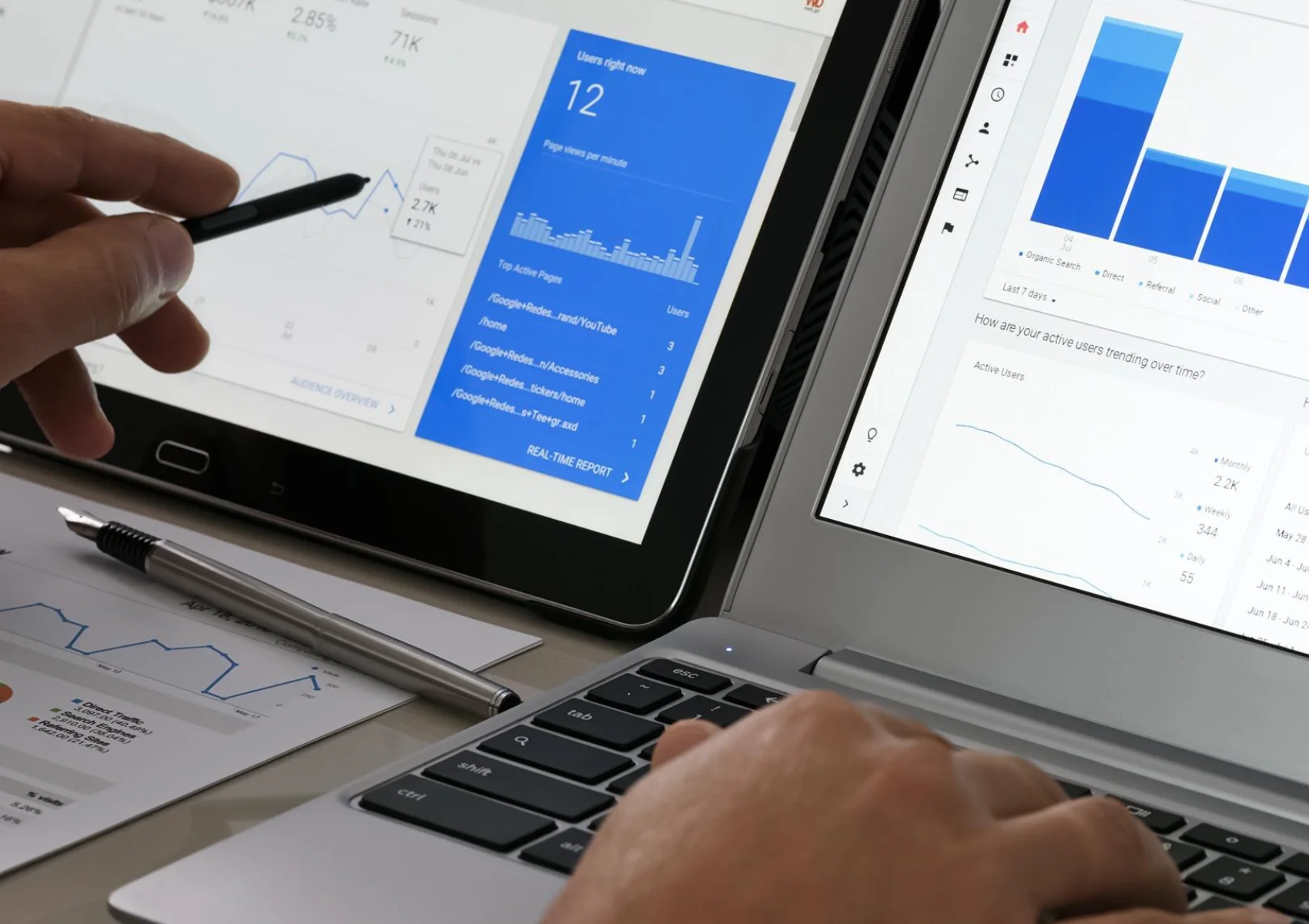
Knowing which numbers to look at makes all the difference. Impressions show how often your ad appeared. Clicks show how many people acted on it. Click-through rate (CTR) is the ratio of clicks to impressions and tells you how compelling your creative actually is. Improving your Google Ads conversions starts with knowing what counts as a real result: a form fill, a phone call, or a sale. Cost per conversion tells you what each of those outcomes costs. Return on ad spend (ROAS) shows how much revenue you get back for every rupiah you spend.
Search and display are measured differently, so don’t hold them to the same standards. For search, CTR and conversion rate are your primary signals. For display, focus on reach, retargeting lift, and assisted conversions. Measurement isn’t something you do once at the end of a campaign. It’s an ongoing habit that separates the campaigns that grow from those that quietly drain your budget.
Get Expert Help From a Google Ads Agency in Bali
Getting search ads vs display ads right in practice takes more than reading a guide. At Gaiada, we’re a Google Ads agency in Bali that helps businesses choose the right mix of search and display, build campaigns that actually perform, and manage spend so your budget goes where it drives real results.
We start with a full campaign audit, a strategy plan built around your actual goals, and monthly management and reporting that keeps everything accountable. No guesswork, no wasted spend. Just a clear plan and a team that follows through.


